
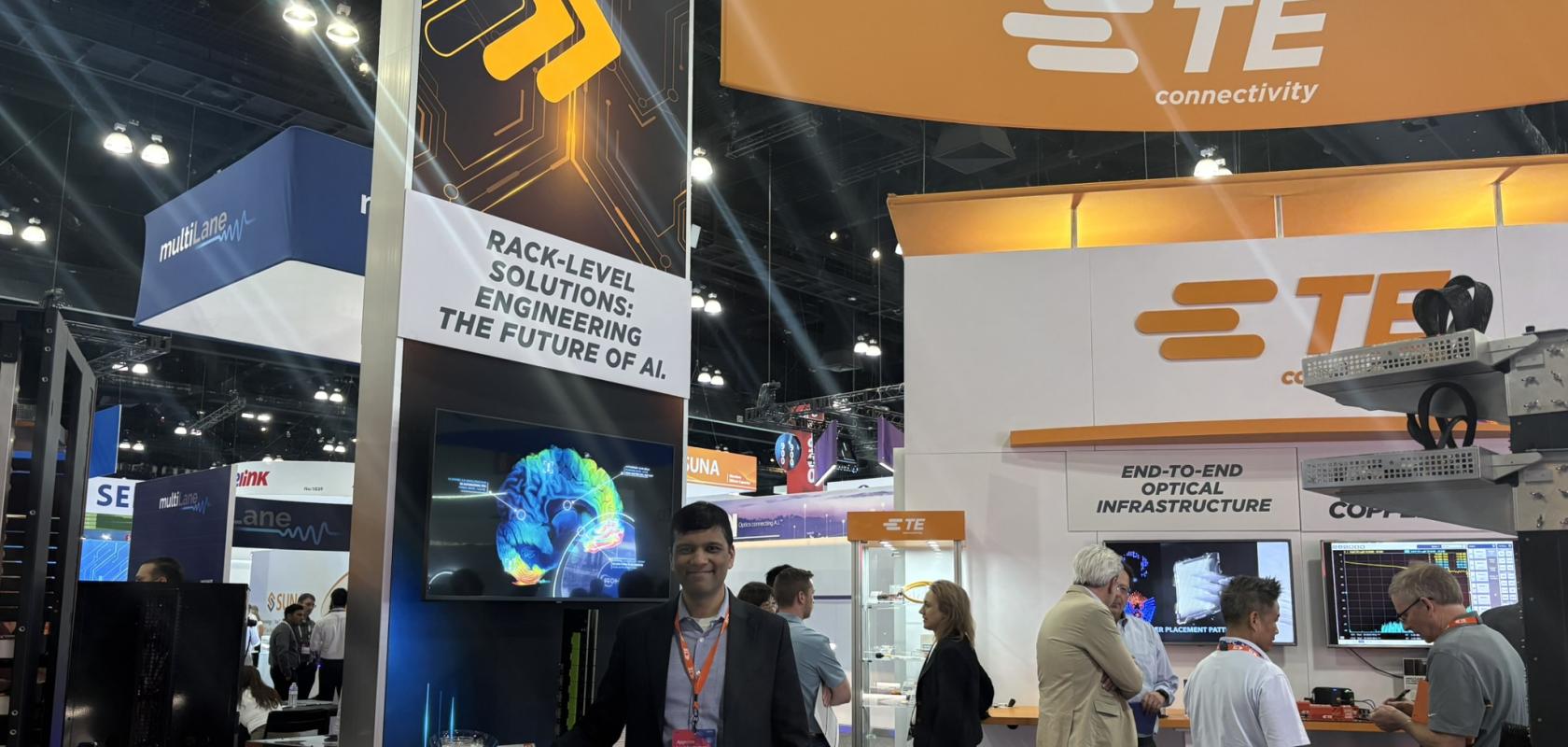
Enabling higher-density AI data centres at scale
TE Connectivity (TE) leveraged its presence at OFC 2026 to showcase potential breakthrough solutions addressing some of the most pressing connectivity challenges in next-generation data centres, from co-packaged optics (CPO) and high-density backplane assemblies to co-packaged copper (CPC), whilst demonstrating how its more than 80-year heritage in connector manufacturing is helping drive innovation at the cutting edge of optical interconnects.
TE’s comprehensive approach to chip-to-chip connectivity reflects its strategic position as one of the largest players in the data centre connectivity market. With approximately $17.3 billion in annual revenue across the broader TE organisation, TE’s Digital Data Networks business unit is focused on tackling the insatiable demand for faster, denser connections in data centre applications.
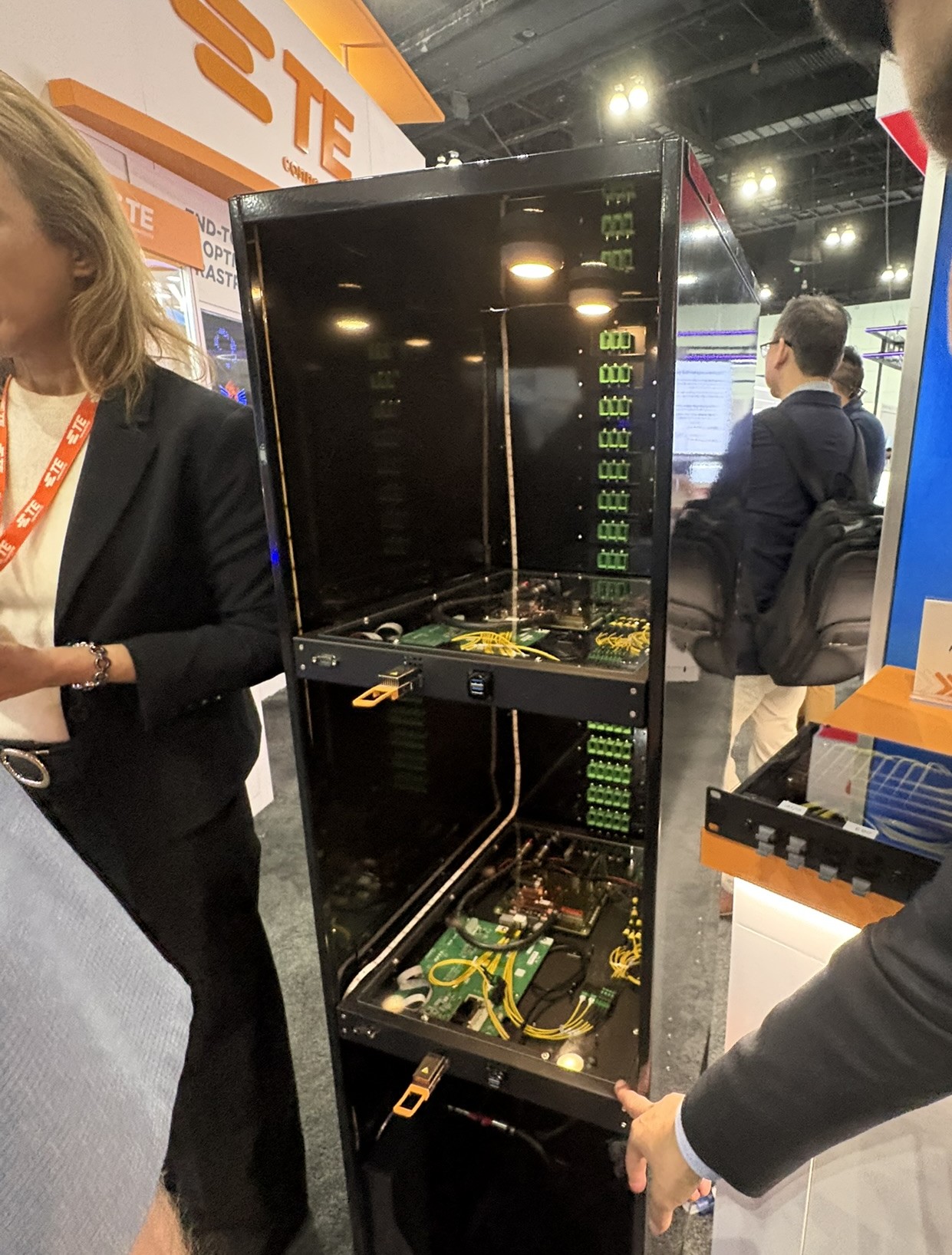
"Our customers want to push more data in less space," explains Pranav Garg, VP - Strategy, Business Development and Incubation, at TE’s Digital Data Networks business unit. "The best way to think about it is as a highway. In that highway, either you can increase the number of lanes, or you can increase the speed at which the cars are moving. Our customers want us to do both."
The company is delivering on both fronts, with solutions that double the density compared to last year whilst simultaneously advancing speeds from 112 Gbps through 224 Gbps and now innovating with 448 Gbps solutions. This rapid pace of innovation reflects broader industry transformation as copper connectivity approaches physical limits and optical solutions become essential for higher speeds.
Innovative fibre array technology for CPO
Central to TE Connectivity's OFC showcase was technology from its recent acquisition of Ram Photonics, which offers a breakthrough capability for high-density fibre array units (FAUs) to address critical co-packaged optics connectivity challenges. Unlike traditional fixed FAUs used in transceiver modules, CPO applications demand detachable solutions that can connect directly to optical engines integrated onto silicon chips.
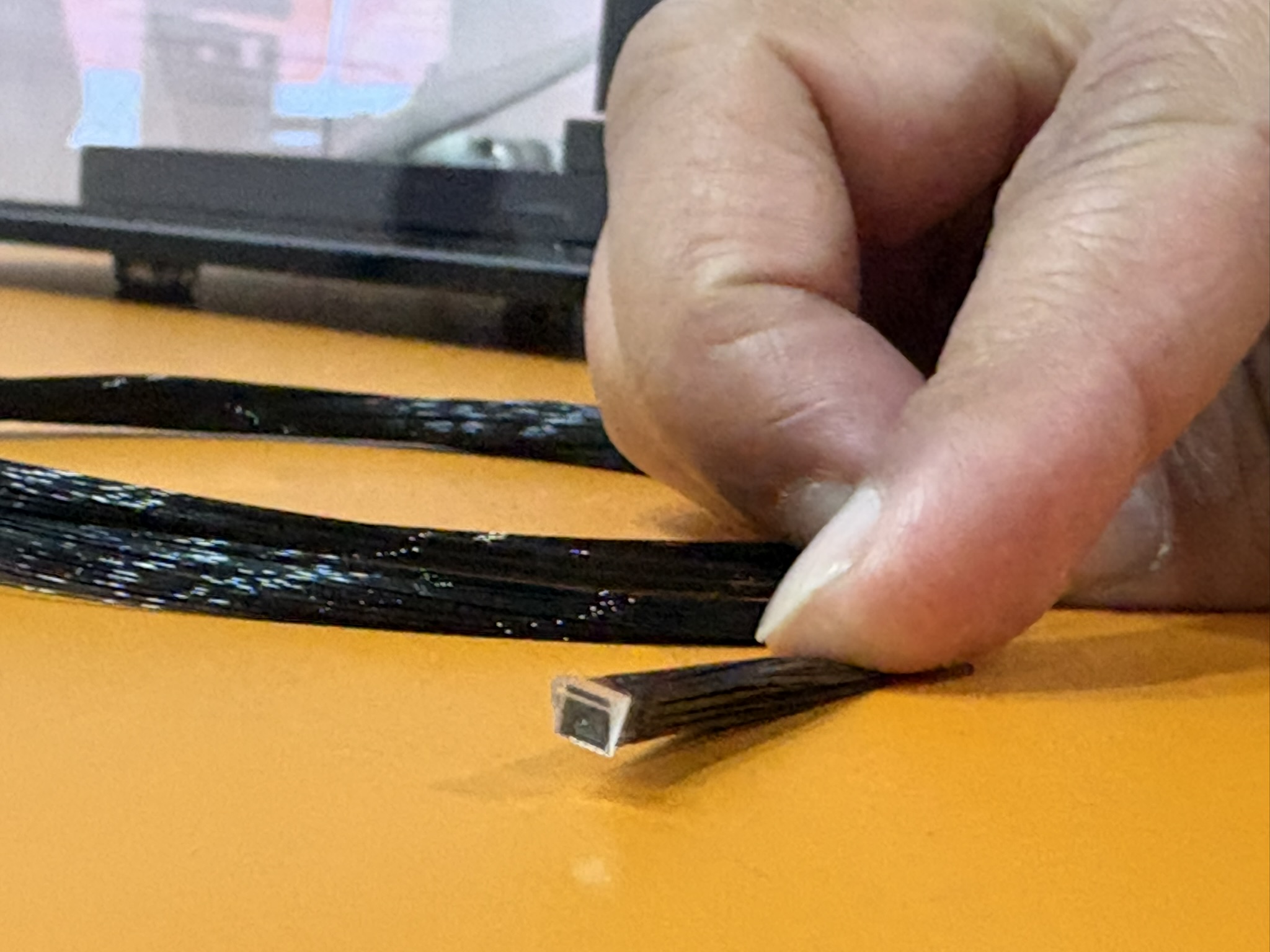
“Optical engines use light rather than electrons and that light needs to be transmitted from the chip to the frontplane or backplane — that’s where FAUs come in,” says Garg. “However, FAUs need to be detachable from the optical engine as a separate pluggable part to enable flexible assembly, testing and servicing at scale.”
What distinguishes TE's approach is its capability to produce multi-row fibre array units. The company is working with customers on complex configurations such as four rows of 25 fibres, enabling high-density CPO applications.
TE’s technology extends beyond the physical configuration to the manufacturing process itself. Historically, fibre connectivity assembly has been an exclusively manual operation requiring extraordinary precision. TE is transforming this manual process into an automated, machine-based operation that scales to high volumes whilst maintaining near zero loss through active alignment to lenses. This automation capability positions the company to help meet some of the massive volume requirements of hyperscale customers.
"Volumes are increasing so much, hence the need for an automated process that can scale at high volume and go to multiple heights and rows," says Garg.
Comprehensive backplane solutions
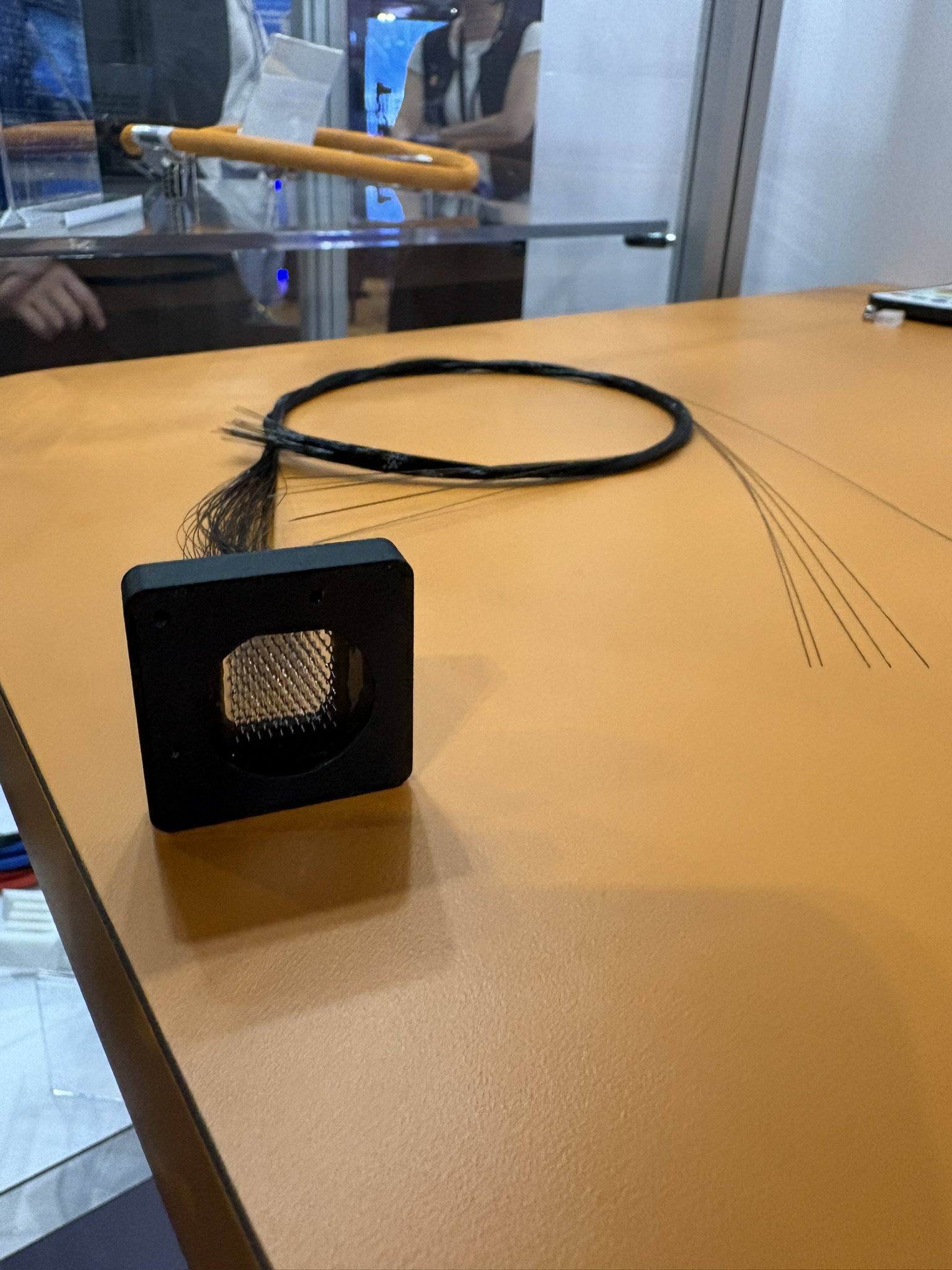
Beyond fibre array units, TE Connectivity demonstrated complete backplane connectivity solutions that transport optical signals across systems. The company's approach addresses the unique challenges of blind-mating backplane connections, which differ significantly from traditional front-plate optical assemblies.
“People have been used to doing regular optical connections, which are the front plane connections,” explains Garg. "When you go to the backplane, there are a lot of considerations when blind-mating connections because you’re making the mate without direct visual alignment, which can turn small mechanical tolerances into larger performance and reliability issues."
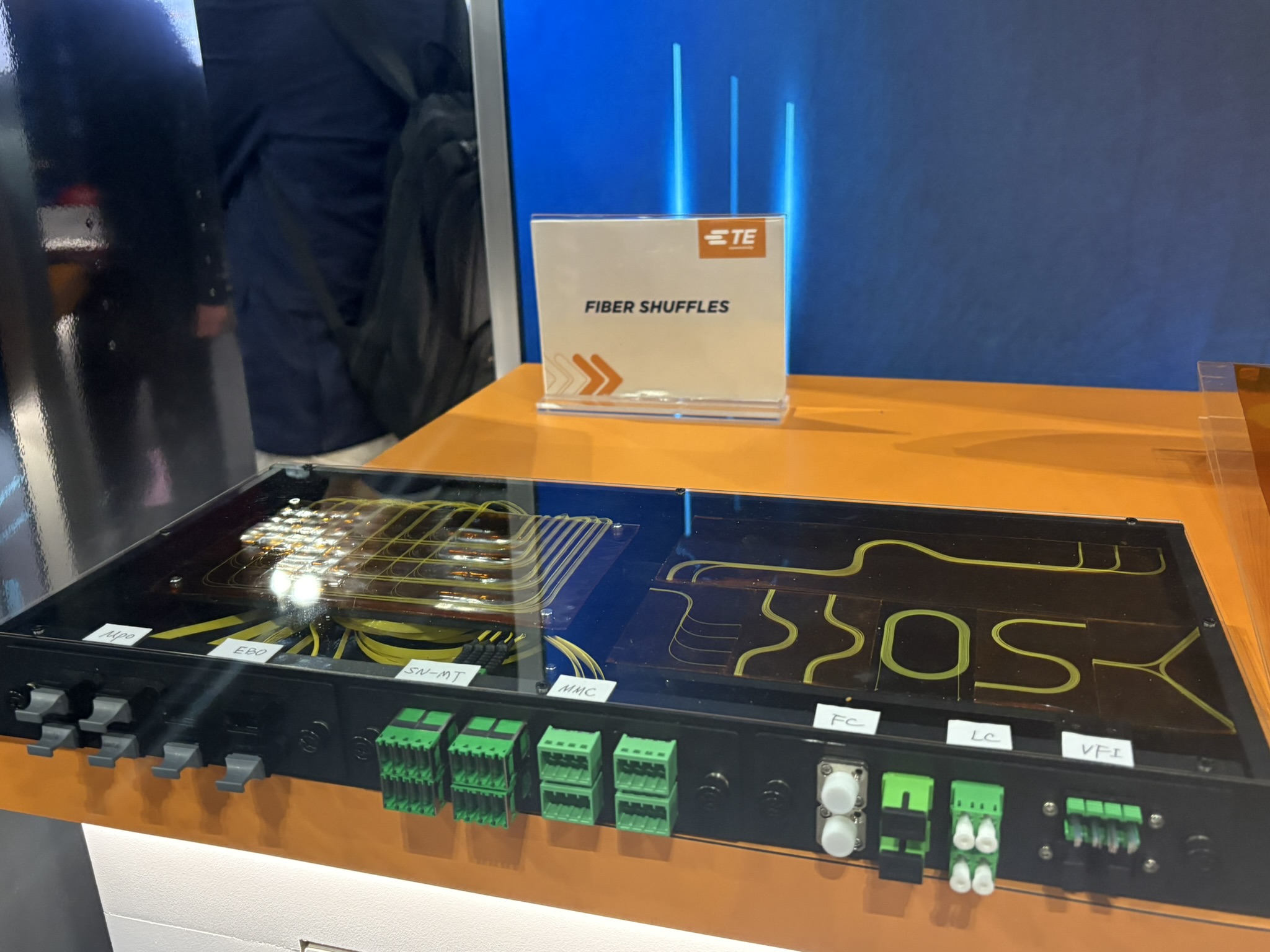
The company also highlighted its fibre shuffle technology, which organises and routes fibres, described as "spaghetti-like hair" by Garg, within systems. This process remains a partially unsolved challenge across the industry.
“Shuffle is an emerging challenge,” Garg notes. “Customers are still in the early stages, and the industry is actively developing approaches—building on new patterns while expecting solutions to evolve as requirements mature.”
Copper innovations for chip-level density
Alongside co-packaged optics, TE showcased co-packaged copper solutions that enable extremely dense connections directly adjacent to processor chips. These copper assemblies provide critical connectivity between accelerators, allowing signals to exit chips without facing the losses inherent in traditional PCB routing.
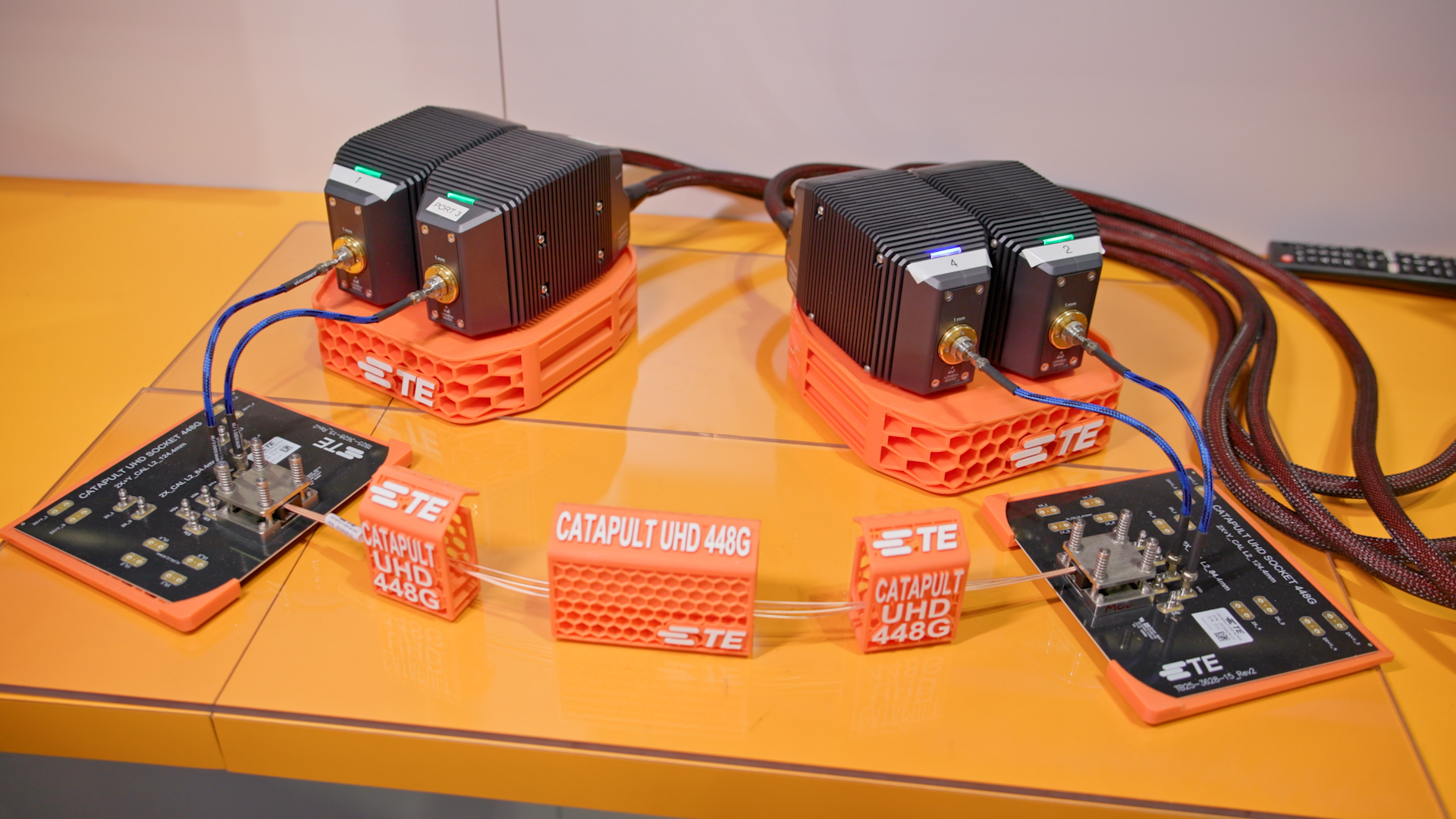
"As signals exit the chip, our customers want a highly dense solution with co-packaged copper right next to, or on, the chip," says Garg.
The mechanical robustness of these connections proves equally critical to their density. At the high volumes and assembly speeds required by hyperscale customers, connectors must maintain integrity without breakage or yield loss.
"It's not only the density, but also the mechanical strength that is required on the board," explains Garg. "When assembling at such high speed and volume, the connector’s pins should not break and yield during assembly should be notable."
Collaboration and scalability to drive innovation
TE Connectivity's value proposition extends beyond individual products to encompass ecosystem collaboration and manufacturing scale. The company emphasises that whilst products remain important, customer success also depends on collaborative design processes and operational capabilities.
"Whilst we will talk about products – and products are important – what's also important is how we work with our customers and the scale at which we are able to ramp our operations to serve them," emphasises Garg. “It's that combination which is valuable to the customer."
As hyperscale designs move from roadmap to rollout, success will hinge on execution—close co-design with customers, rapid validation, and reliable high-volume manufacturing. TE Connectivity is scaling these capabilities to deliver consistent optical and copper connectivity, rack after rack, generation after generation.
Learn more at www.te.com/AI