
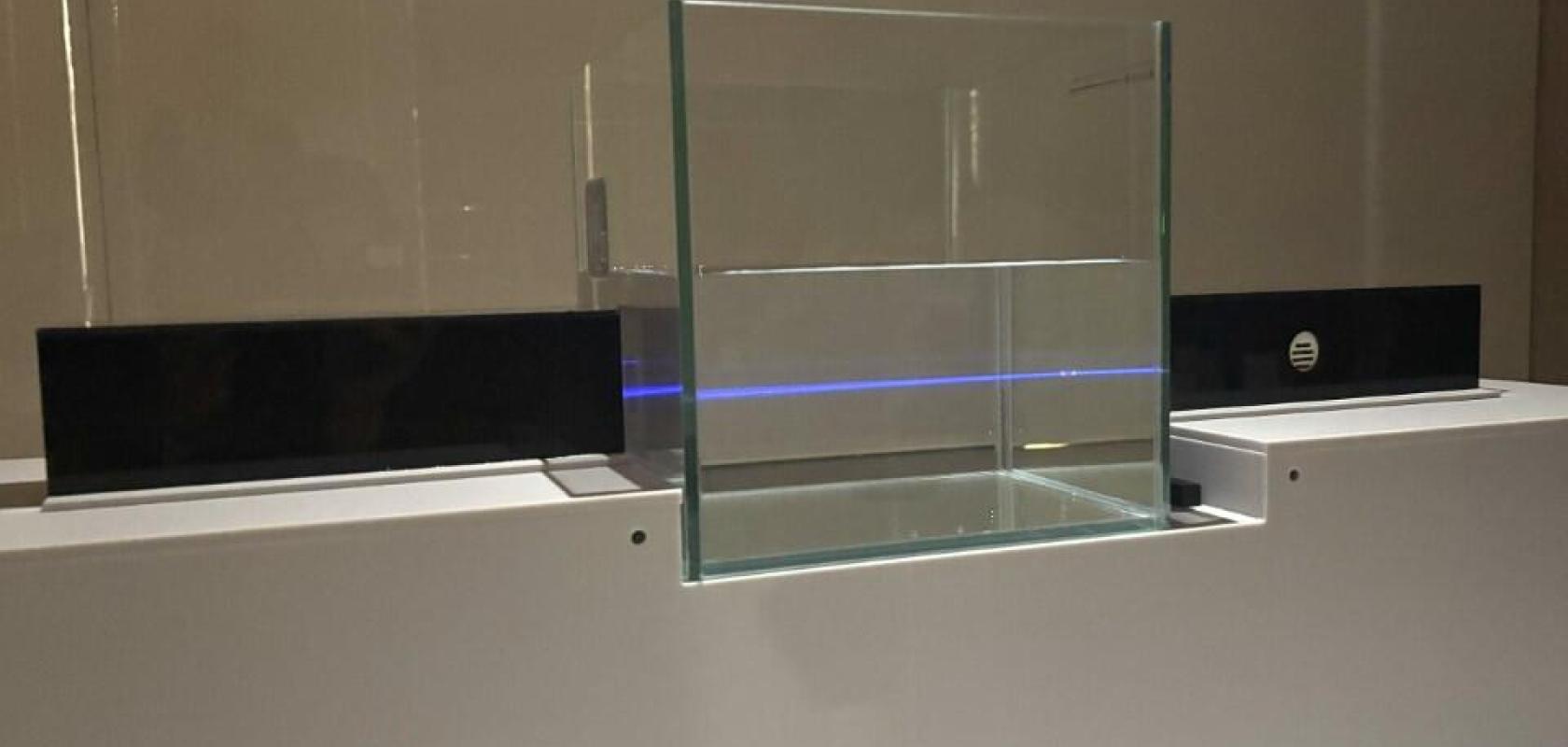
Kyocera has demonstrated underwater wireless optical communication (UWOC) technology capable of transmitting data at 5.2Gbps over short ranges. This marks what the company claims to be among the fastest fibreless UWOC speeds achieved to date.
The Japanese technology firm said the breakthrough, achieved in freshwater laboratory conditions, could enable real-time transmission of high-resolution imagery, video, and sensor data for ocean exploration and autonomous underwater vehicle (AUV) operations.
Addressing the bandwidth bottleneck
This development directly responds to the severe limitations in current subsea communications, which typically operate at speeds of just a few Mbps via acoustic or low-speed RF links. This constraint has restricted the ability to share high-resolution video and large data sets in real time from AUVs and drones used in marine surveys, structural inspections, and resource exploration.
Kyocera achieved the 5.2Gbps transmission rate through two key, synergistic developments:
- A proprietary Physical (PHY) Layer designed specifically for the unique characteristics of the underwater environment.
- An optical front-end circuit featuring a wide bandwidth exceeding 1GHz.
Custom PHY layer drives performance
Unlike standard communications specifications adapted from wired or terrestrial wireless technologies, Kyocera developed original communication standards optimised for subsea optical attenuation and scattering. The company said this tailored approach provides greater stability and capacity for underwater data transfer.
The optical front-end circuit exploits the full bandwidth capabilities of optical semiconductor components (likely blue/green lasers), enabling data transfer speeds approximately 2.5 times faster than conventional underwater optical communications, according to Kyocera.
Application potential and future focus
Potential applications span marine research, industrial inspection, and infrastructure development, including:
- Real-time high-definition video streaming from AUVs.
- High-precision inspection of subsea infrastructure, such as pipelines and underwater cables.
- Large-volume data acquisition for oceanographic research.
- Simultaneous, high-speed data collection from dense subsea sensor networks.
Kyocera indicated that future developments will focus intensely on extending the communication distance and increasing capacity, with the aim of supporting next-generation marine ICT infrastructure.
The technology will be demonstrated at CES 2026 in Las Vegas from 6-9 January.