
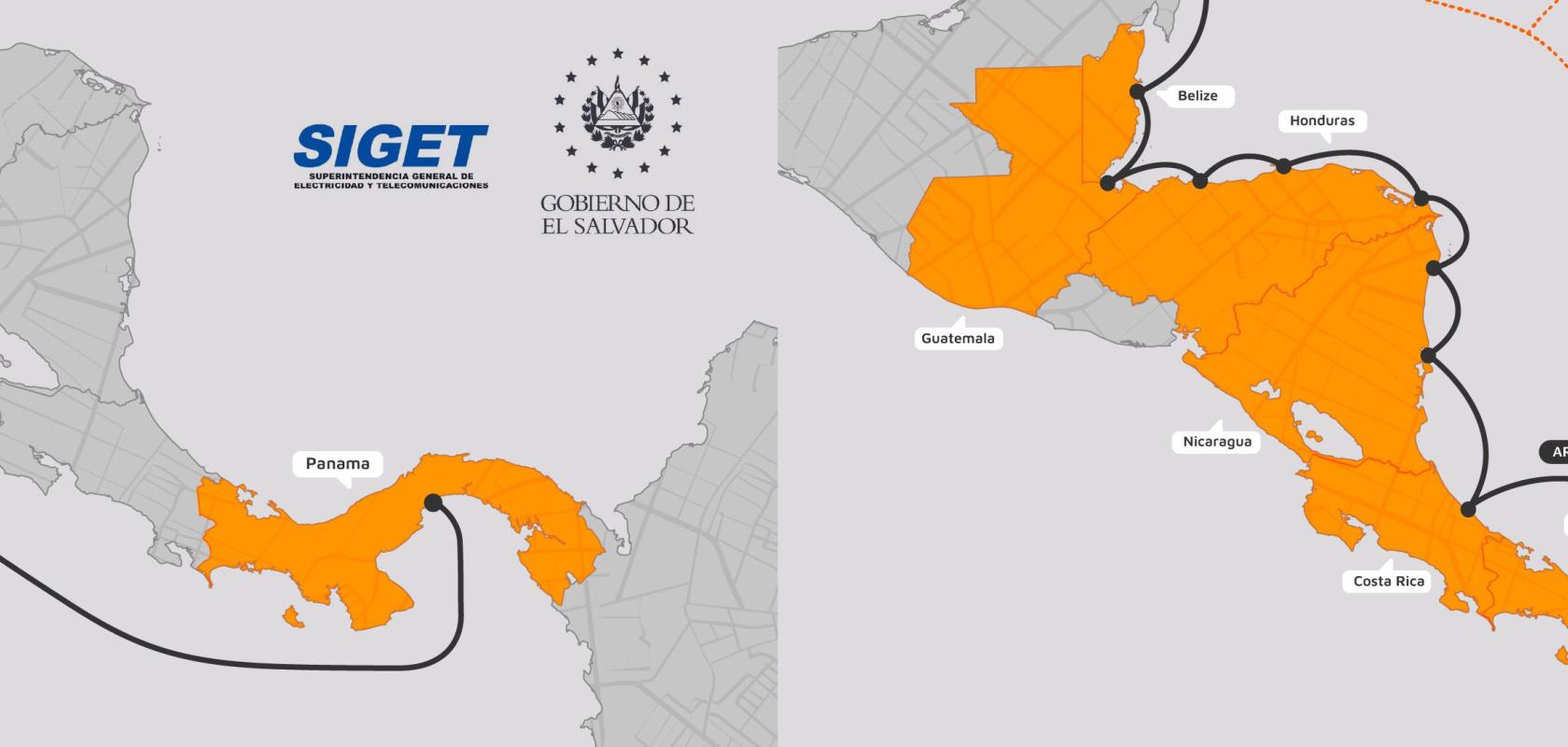
Liberty Networks has been selected by El Salvador's telecommunications regulator to design, construct and operate the country's first submarine cable, ending the nation's reliance on terrestrial connections to international networks.
The General Superintendence of Electricity and Telecommunications (SIGET), awarded the contract to the Latin American connectivity provider to deploy a 1,800km system connecting El Salvador to major international hubs. The cable is scheduled to become operational in the second half of 2028.
Terrestrial dependence creates vulnerability
El Salvador currently relies exclusively on land-based links with neighbouring countries for international connectivity, with no direct subsea connections serving its 6.3 million citizens. The new system aims to deliver improved reliability, enhanced capacity and greater resilience for the Central American nation's digital infrastructure.
"This investment goes beyond building critical infrastructure; it lays the foundation for economic growth, innovation and opportunity for all Salvadorans," said Ray Collins, senior vice president of infrastructure and corporate strategy at Liberty Latin America. "Liberty Networks has a long track record of managing complex subsea systems with exceptional reliability and performance."
The company expects to announce its selected technology partner shortly. Liberty Networks operates as part of Liberty Latin America and manages nearly 50,000km of submarine fibre optic cable and 17,000km of terrestrial networks connecting over 30 countries across Latin America and the Caribbean.
Regional subsea portfolio expansion
The operator's existing subsea portfolio includes ARCOS-1, CFX, ECFS, PCCS and MAYA-1.2 cable systems. Liberty Networks is also developing MANTA, described as a high-capacity pan-regional system for the Caribbean and Latin America.
The El Salvador deployment represents a strategic infrastructure upgrade for a country seeking to enhance its position as a digital economy hub in Central America. Direct subsea connectivity typically provides lower latency, higher capacity and improved redundancy compared to terrestrial-only routing through neighbouring territories.
Collins noted that SIGET's selection recognises Liberty Networks' operational expertise in deploying and maintaining submarine cable systems across the region. The company provides connectivity services to enterprises, carriers and business communities through its network infrastructure, solutions portfolio and data centre facilities.
The 1,800km cable route and landing locations have not been disclosed, though systems serving Central American markets typically connect to major cable hubs in the United States, Mexico or Panama to access global network infrastructure.