
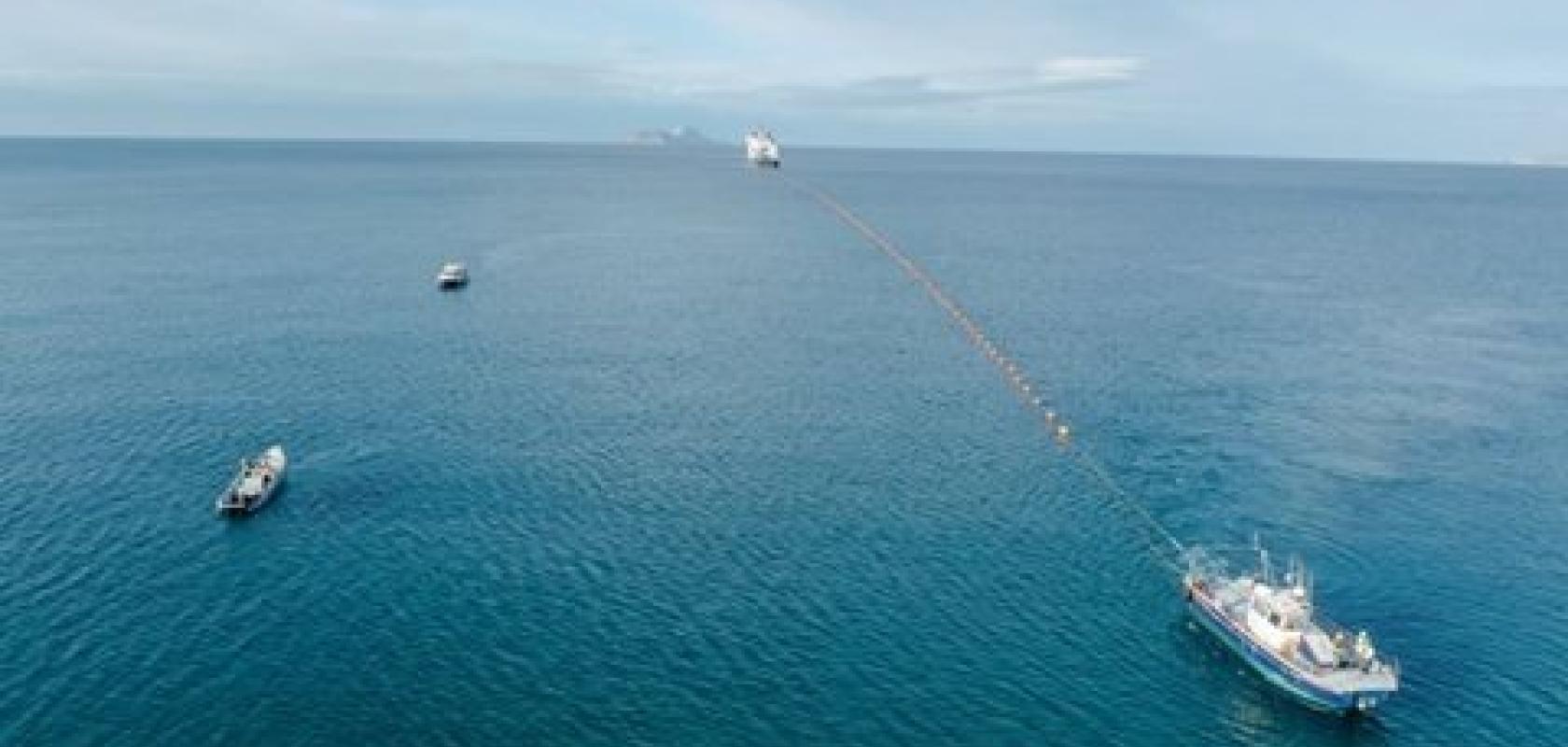
Vodafone is significantly expanding its footprint in the Eastern Mediterranean with the announcement of Thetis Express, a new 340km subsea optical fibre cable system. The project, which has already entered the marine survey phase, is designed to link Crete with mainland Greece, providing a massive boost to regional capacity and resilience.
Once operational, the system will connect carrier-neutral data centres in Heraklion (Crete) and Attica (Athens). With a total design capacity of 180Tbps, the cable is capable of supporting the equivalent of 25 million simultaneous 4K video streams, a vital upgrade as AI and cloud-driven traffic continues to surge.
Subsea cable bridging the gap: The Milos interconnection
Unlike a direct point-to-point link, the Thetis Express employs a strategic route comprised of two distinct marine segments:
Segment 1: 129km linking Athens to the island of Milos.
Segment 2: 163km linking Milos to Crete.
This architecture is supported by terrestrial connections across Milos, effectively integrating the island into the high-capacity fabric. The project is part of a broader infrastructure play by Vodafone Carrier Services, which is also constructing three new high-speed terrestrial cable systems. Together, these routes aim to establish Greece as a primary transit point in the digital corridor between Europe, Africa, and Asia.
Global integration with 2Africa subsea cable network
One of the most strategic aspects of the Thetis Express is its planned integration with the 2Africa cable network. 2Africa is currently one of the world's largest subsea projects, designed to connect 33 countries across three continents.
By linking Thetis Express to Vodafone’s existing landing station in Crete, already a 2Africa node, Vodafone is creating a high-speed "off-ramp" for international traffic into mainland Europe. This move enhances Greece's geopolitical standing as a digital gateway, offering third-party providers, ISPs, and hyperscalers a more resilient path for data transit.
"Vodafone plays a central role in ensuring internet traffic flows smoothly and securely worldwide," said Fanan Henriques, Product and International Business Director at Vodafone Business. "We are now extending this capability using a mix of new optical fibre terrestrial and subsea cables."
Wholesale subsea cable opportunities and network diversity
For the wholesale market, the new system offers crucial redundancy. In the event of a cable break or power failure on alternative routes, the Thetis Express provides the ability to quickly reroute traffic, ensuring continuity for vital online services such as banking, healthcare, and education.
The launch of Thetis Express, alongside the recently announced Kardesa system in the Black Sea, signals Vodafone's intent to diversify away from traditional bottlenecks. By building out these high-capacity, "petabit-ready" corridors, the operator is positioning itself to handle the next generation of data-intensive workloads.