

ECOC 2026, Europe's optical communications conference and exhibition, comes to Malaga from 20 to 24 September as the industry confronts the latest challenges reshaping optical infrastructure. With more 8,000 attendees expected, 340 global exhibitors, and comprehensive technical programming spanning optical transmission, photonic integration, quantum technologies, and emerging applications, the event will examine how optical innovation is scaling to support AI infrastructure expansion and next-generation network requirements.
AI data centre deployments have accelerated dramatically over the past 18 months, creating unprecedented demands for optical bandwidth, power efficiency, and architectural flexibility. Simultaneously, emerging technologies including hollow-core fibre, silicon photonics, and quantum communications are transitioning from research toward commercial deployment. ECOC 2026 will showcase how these innovations intersect to address real infrastructure challenges.
The event arrives as European operators and vendors increasingly recognise that optical technology, not compute capacity, constrains AI infrastructure scaling. Power consumption, interconnect density, and transmission reach have become critical limiting factors. Conference programming addresses these practical challenges alongside fundamental research exploring what optical communications can become.
AI data centres dominate technical agenda
As one might expect, the ECOC conference programme explicitly structures sessions around AI infrastructure requirements. Multiple dedicated streams address how optical technology must evolve to support hyperscaler deployments.
One major discussion examines light sources for next-generation optical communication systems specifically targeting AI data centres. Rather than a generic light source discussion, the session focuses on requirements emerging from GPU clusters, distributed training systems, and emerging workloads. Questions address power efficiency, wavelength diversity, and integration approaches enabling hyperscalers to deploy optical sources matching specific system architectures.
Another session directly questions whether AI workloads require end-to-end optimised network infrastructure. The framing reflects an emerging recognition that conventional network architectures may not match AI traffic patterns and performance requirements. Discussion will examine whether traditional over-subscription ratios apply to AI systems, how optical networking can better match compute clustering, and what architectural changes may be necessary.
The "winning interconnects for AI" session looks to address scale-up versus scale-out technology choices, examining whether conventional data centre interconnect approaches remain optimal as GPU clusters grow denser and more interconnected. This discussion matters practically as operators decide between pluggable optics, co-packaged solutions, and emerging approaches.
Power consumption receives sustained attention. One major session addresses whether the industry can overcome the power wall across optical communication systems, spanning AI clusters to submarine networks. The discussion acknowledges the uncomfortable reality: power consumption increasingly constrains network expansion, not fibre availability. Sessions examine how optical innovations can reduce power per bit whilst supporting higher aggregate capacity.
Hollow-core fibre moves toward mainstream deployment
Hollow-core fibre (HCF) transitions from a research curiosity toward a practical infrastructure technology, featuring prominently across multiple conference sessions. Unlike conventional solid-core fibres, HCF transmits light through a hollow centre surrounded by air gaps, enabling lower latency, reduced nonlinearity, and improved power efficiency.
Sessions examine HCF fabrication challenges and commercial deployment pathways. Discussion addresses practical questions: what manufacturing processes enable volume production? How do optical properties scale across different fibre designs? What deployment scenarios justify HCF economics?
One particularly significant discussion examines whether hundreds-of-kilometre unrepeatered HCF links could redefine the economics and design of terrestrial and submarine networks. The question reflects genuine potential: if HCF enables transmission over much longer distances without intermediate amplification, network architecture and economics could transform substantially. Regional operators and submarine cable designers would have fundamentally different options for network planning.
HCF characterisation and standardisation sessions address practical deployment requirements. Before widespread deployment, the industry must agree on measurement methods, performance specifications, and reliability standards. ECOC discussion will help define these standards to enable confident commercial deployment.
Quantum technologies progress toward field trials
Quantum communications represent an emerging optical infrastructure opportunity. ECOC programming examines recent progress in quantum repeaters, long-range quantum key distribution, and quantum state transmission. Discussion includes field trial updates and the path toward production deployment.
The quantum repeaters session addresses a fundamental challenge: quantum states decay over distance. Repeaters amplify quantum information without destroying quantum properties, enabling long-distance quantum communication. Recent progress brings practical deployment closer, though significant engineering challenges remain.
Long-range quantum key distribution discussion examines how quantum security can extend to metropolitan and longer distances. Current implementations typically operate over limited ranges. Extending range enables practical quantum-secured network deployments for a broader operator base.
Quantum networks discussion addresses architecture and system design questions. Rather than isolated quantum links, operators will eventually want quantum networks where multiple nodes can share quantum entanglement. ECOC sessions explore how quantum networks could be structured and what applications justify deployment.
6G and beyond: architecting future networks
Beyond immediate AI infrastructure requirements, the conference extensively addresses 6G technology development. Sessions examine the UK research strategy for 6G, spectrum policies for next-generation networks, and how academic innovation translates toward commercial deployment.
Integrated photonics innovation accelerates
Silicon photonics and broader integrated photonics development feature extensively. Sessions examine photonic-driven architectures for access networks and AI clusters, examining how integration enables performance and efficiency improvements impossible with discrete components.
Discussion addresses the transition from research to production. Manufacturing at scale requires solving integration challenges, achieving yield, and developing packaging approaches. Sessions cover advanced modulators, receivers, switches, and other integrated components moving from prototype toward commercial availability.
One notable session addresses optical computing architectures using integrated photonics. Rather than using optics purely for transmission, optical approaches could potentially perform computation directly. Early research explores photonic neural networks and other computing paradigms. ECOC discussion helps assess whether optical computing represents a practical alternative or remains a research curiosity.
Access networks evolution and PON advancement
Beyond the hyperscale data centre focus, the conference addresses the continuing evolution of access network technology. Sessions examine very high-speed PON systems, hybrid coherent and intensity-modulated direct-detection (IMDD) approaches, and architectural choices as operators upgrade access infrastructure.
Discussion addresses a practical operator question: how do access networks scale to support gigabit and multi-gigabit services? Traditional PON technologies reach practical limits. Advanced PON approaches using coherent transmission or other techniques enable higher speeds but introduce complexity tradeoffs. ECOC sessions help operators evaluate options for next-generation access deployments.
Optical sensing and spectrum expansion
Increasingly, optical fibres serve dual purposes: transmission and sensing. The conference extensively explores distributed optical sensing applications ranging from structural health monitoring to earthquake detection. Sessions examine how telecom fibre can become a geophysical sensor network detecting seismic activity and other phenomena.
Free-space optical communications sessions address atmospheric challenges limiting optical wireless systems. Recent progress in turbulence mitigation enables longer, more reliable free-space optical links. Applications include ground-to-space communications, underwater optical links, and challenging terrestrial scenarios.
Exhibition and networking emphasis
Alongside conference programming, the exhibition remains Europe's largest optical communications showcase. The Product Focus theatre will highlight the latest innovations and product announcements. The FTTx Focus area brings together fibre access solutions in a dedicated showcase, while the Demo Zone provides hands-on experience with cutting-edge systems and components.
The Market Focus theatre features more than 50 presentations from industry experts discussing commercial trends alongside technical innovation. Speakers will address market drivers, deployment timelines, and emerging business models.
Significance for optical infrastructure professionals
ECOC 2026 reflects the optical communications industry at a point where AI infrastructure expansion is driving unprecedented demands for optical innovation. Simultaneously, emerging technologies are becoming commercially viable, offering solutions to longstanding challenges. This convergence creates both opportunities and uncertainties.
For infrastructure professionals, vendors, and researchers, ECOC provides an essential forum for understanding technology trajectories and commercial implications. Discussions will address practical deployment challenges alongside fundamental innovation. Operators will share experiences scaling optical infrastructure to unprecedented levels, researchers will present breakthrough results, and vendors will showcase technologies addressing real infrastructure needs.
As optical communications transitions from a mature technology toward active innovation addressing AI infrastructure requirements, ECOC 2026 will demonstrate why optical technology remains essential to digital infrastructure and how ongoing innovation is reshaping what optical systems can accomplish.
Sponsored
Companies to watch
Ahead of the exhibition, here are some of the key offerings that caught our eye:
LIGENTEC
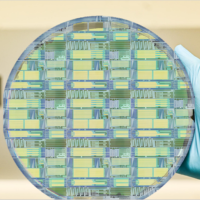
"For optical communication engineers, scaling link capacity usually means fighting high insertion loss, thermal overload, and soaring power budgets. We engineered a platform so you don't have to compromise. By bonding Thin-Film Lithium Niobate (TFLN) to our ultra-low-loss Silicon Nitride (SiN) base, LIGENTEC delivers > 110 GHz modulation bandwidth with low driving voltage and minimal optical loss. Fully integrated high efficiency heaters and InGaAs photodiodes complete the platform to provide total on-chip processing. We support your architecture end-to-end: • Validated PDKs for first-time-right PIC designs. • Frequent MPW runs to lower prototyping costs. • Automotive-qualified 200 mm foundry capacity for high-volume manufacturing." Accelerate your optical communication roadmap with LIGENTEC LABS → | 
 |