
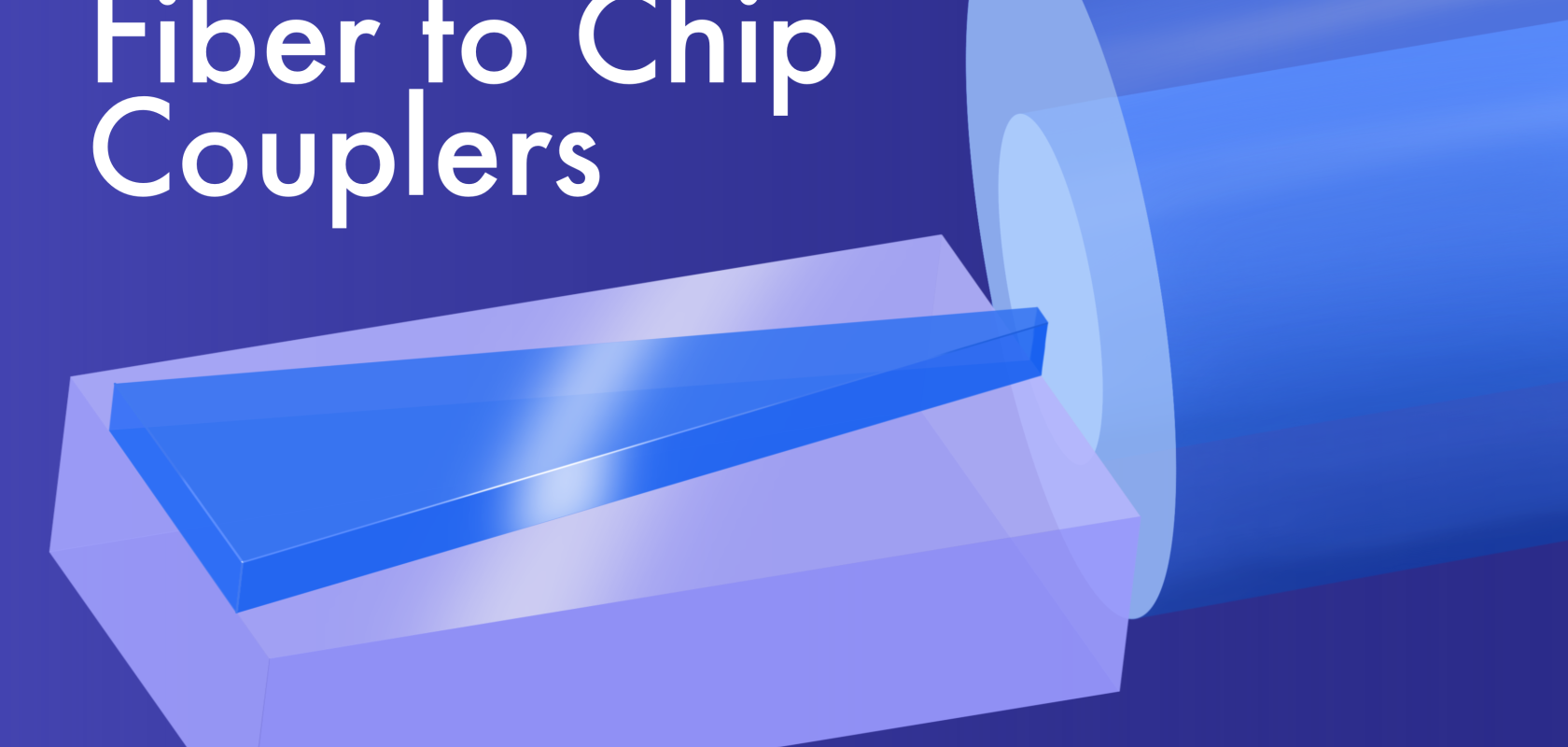
Photon Design has announced that its FIMMWAVE photonic simulation software played a key role in enabling Photonect's development of an epoxy-free, fibre-to-chip optical interconnect technology designed to address performance bottlenecks in data centre, AI, telecoms and high-performance computing applications.
Epoxy-based optical interconnects have become a limiting factor in data transmission speeds, with common failure modes including thermal drift, ageing and power-induced degradation. Photonect's laser fusion packaging technology directly bonds optical fibres or glass components to photonic chips without adhesives, eliminating these failure mechanisms while delivering what the company claims are faster, more scalable interconnects.
Simulation workflow accelerates design to fabrication
Photonect adopted a simulation-driven design approach using Photon Design's FIMMWAVE for waveguide structure development and FIMMPROP for propagation modelling. The tools employ eigenmode expansion (EME) techniques to process simulations quickly, enabling rapid design iterations and confident transition from design to fabrication.
Dr Juniyali Nauriyal, CEO of Photonect, said the software enabled accurate modelling of edge coupling to commercially available photonic foundry processes: "Eliminating epoxy gives highly efficient coupling to third-party photonic devices, with losses below half a dB per facet at 1,310 nm. In fact, our optical interconnections deliver cost savings of between 50% and 80%, are up to 10 times faster, support three times more optical power, and have up to four times the efficiency."
Nauriyal added that FIMMWAVE's use of eigenmode expansion was critical to the development process: "This was key, as it enabled rapid iterations in our design approach and confident transition to fabrication, validating low-loss coupling without adhesives."
Industry context: packaging as the bottleneck
Dr Dominic Gallagher, CEO of Photon Design, said rising data rates and power density demands in AI, cloud computing and high-speed networking had made fibre-to-chip attachment the bottleneck in optical systems: "Traditional epoxy-based packaging methods are slow, costly and increasingly difficult to manufacture in volume. However, using our simulation tools, Photonect has reinvented optical interconnect packaging, with epoxy-free fibre-to-chip attachment and an ultra-low-loss silicon dioxide mode converter design – a game-changer in the industry."
The technology combines laser fusion bonding with an engineered silicon dioxide mode converter to achieve the reported coupling efficiency figures.