
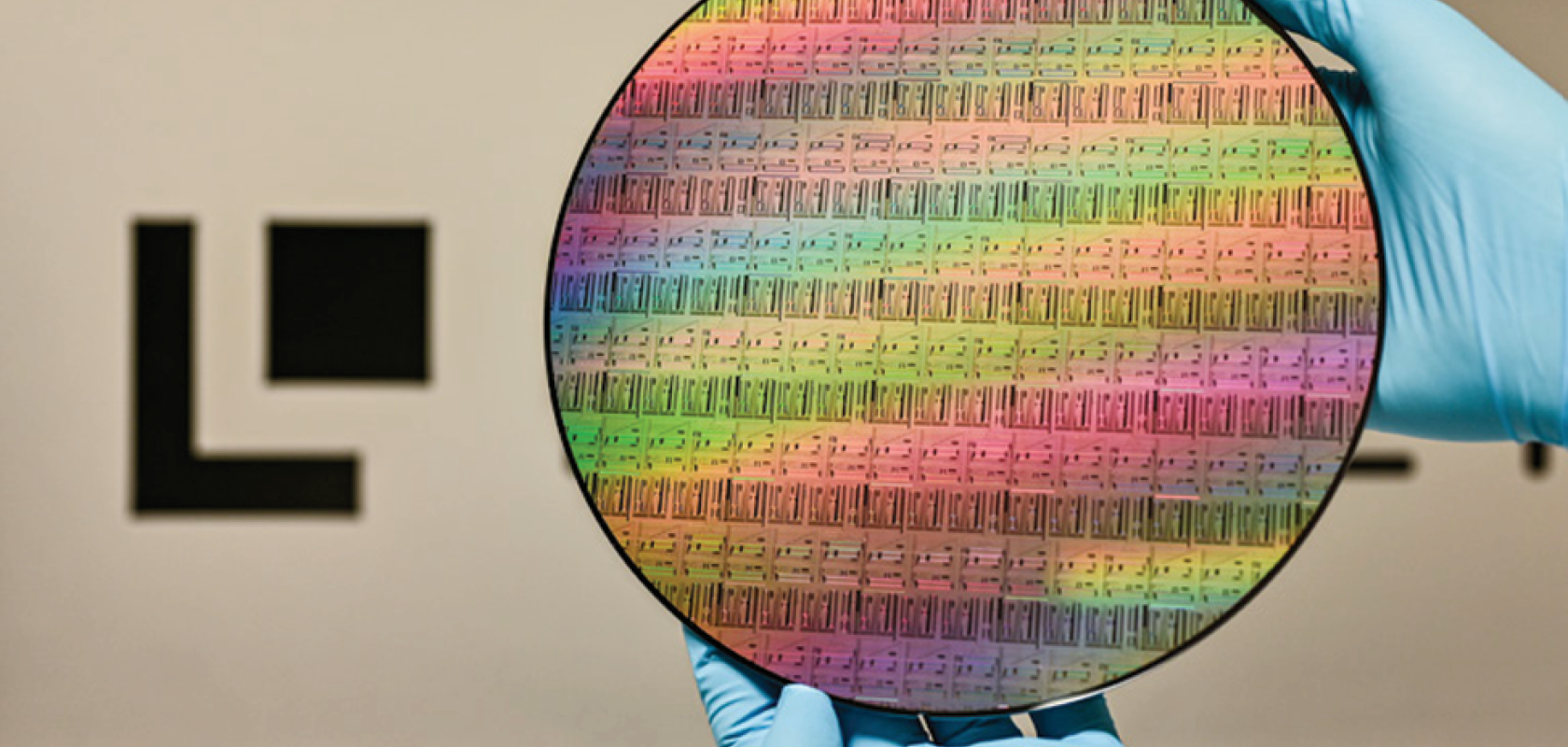
Ligentec and X-Fab have expanded their integrated photonics collaboration to bring silicon-on-insulator (SOI) technology and thin-film lithium niobate (TFLN) integration to volume production
The partnership targets high-bandwidth datacom and telecom markets alongside quantum and sensing applications. The move will see X-Fab’s XPH90 silicon photonics platform integrated into Ligentec’s broader photonics portfolio, which already includes established low-loss silicon nitride (SiN) technology.
Ligentec will act as the primary customer interface for both platforms, offering a unified entry point for companies developing next-generation optical communication systems. While the SiN technology serves applications requiring low-loss characteristics across multiple wavelength ranges, the SOI platform is specifically positioned to address the bandwidth-heavy requirements of modern datacom networks.
Industrialising thin-film lithium niobate
A key focus of the collaboration is industrialising TFLN integration on both SiN and SOI platforms. The partners plan to scale TFLN-on-SiN and TFLN-on-SOI technologies within X-Fab’s 200mm wafer foundry infrastructure.
TFLN offers significant advantages in modulation efficiency and bandwidth compared to traditional silicon-based modulators, making it highly attractive for advanced coherent transmission. Both platforms will support heterogeneous integration of active and passive components, including lasers, optical amplifiers, and high-speed photodetectors.
Bridging the lab-to-fab gap
Rudi De Winter, CEO of X-Fab says: "By fostering this heterogeneous integration, particularly with thin-film lithium niobate, we are providing the essential building blocks for quantum computing and the next generation of telecommunications."
Thomas Hessler, CEO of Ligentec says that the partnership gives customers early access to a broader technology stack, enabling "cutting-edge performance" in sensing and connectivity. The collaboration aims to establish a clearer pathway from R&D through to industrial-scale manufacturing, strengthening Europe’s position in the global photonic integration supply chain.