The North American fibre landscape is currently defined by a sense of historic momentum met by technical evolution. From 17-20 May 2026, the Fiber Broadband Association (FBA) will host Fiber Connect 2026 at the Gaylord Palms in Orlando, Florida. This year marks a significant milestone: the 25th anniversary of an organisation that began as the FTTH Council Americas in 2001 and has since evolved into the definitive voice for the continent's fibre ecosystem.
With more than 5,000 attendees, 300 exhibitors, and a programme featuring 270 speakers, the event is set to be the largest in the association's history. It arrives at a time when the "Fiber Forward" movement is no longer just about passing homes, but about transforming the very fabric of rural and urban communities through 10G speeds, integrated AI, and the closing of the digital divide.
A quarter-century of connectivity
FBA’s journey from a small technical council to an association representing 624 member companies reflects the explosive growth of the industry itself. Today, FBA represents the complete fibre broadband ecosystem, from the manufacturers and deployment specialists to the policy makers and service providers, including traditional ILECs, electric cooperatives, municipalities, and more.
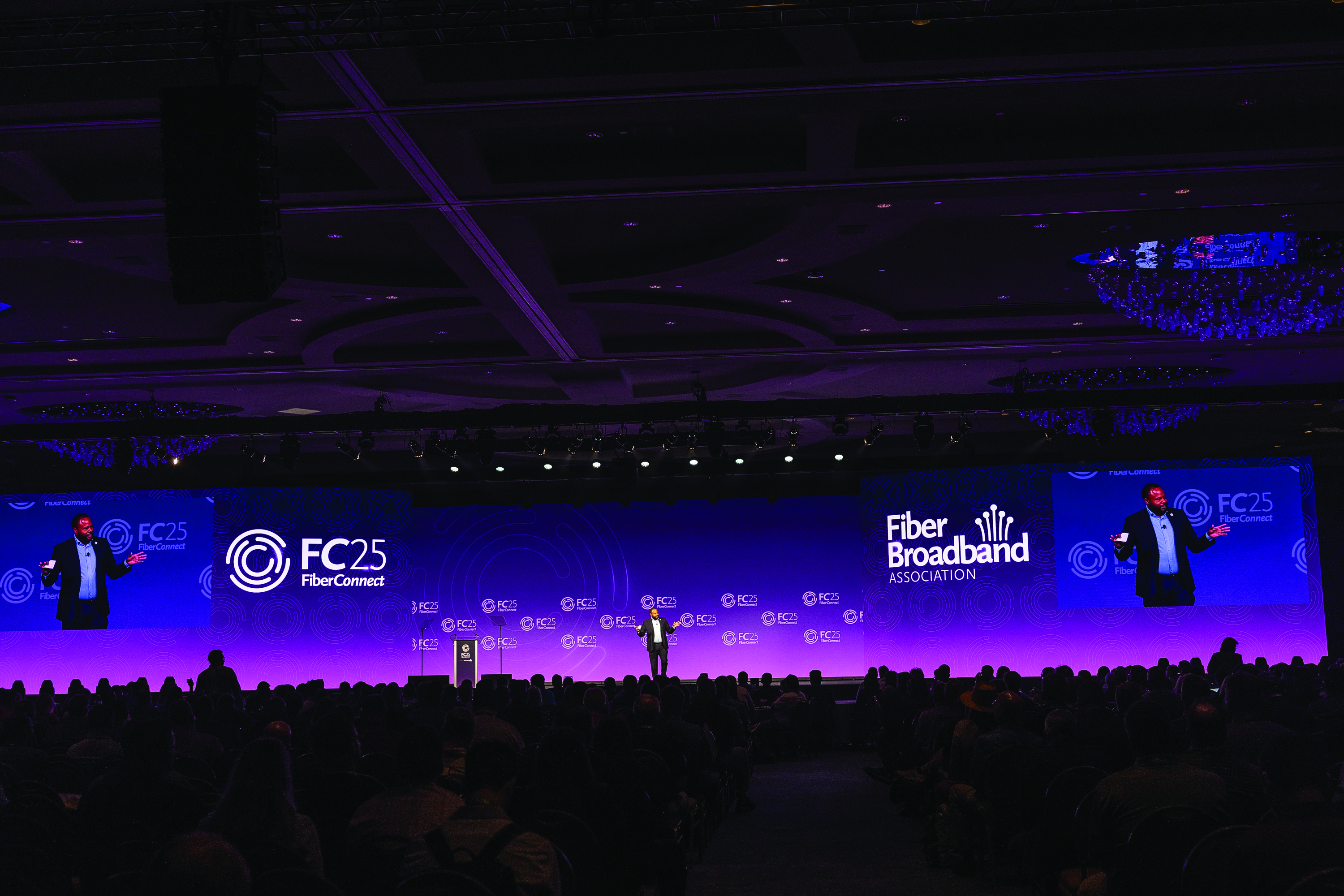
FBA’s previous Conference Chair Evann Freeman welcomes attendees to Fiber Connect 2025 in a packed auditorium for general sessions. (Credit: FBA)
“This is a very special year for us,” says Jessica Koch, FBA Conference Chair. “Celebrating 25 years in an industry that has moved from niche technology to essential national infrastructure is a testament to our members' persistence. We aren't just looking back at the last quarter-century; we are using this event to define what the next 25 years of fibre-led innovation looks like.”
The scale of the 2026 event is a clear indicator of the market’s health. With more than 80 sessions, the programme is designed to address the multifaceted challenges of modern deployment, from the complexities of the BEAD (Broadband Equity, Access, and Deployment) programme to the practical integration of Wi-Fi 7 and 50G PON.
The operator ecosystem: From telcos to cooperatives
One of the unique characteristics of Fiber Connect is the diversity of its operator base. While Tier 1 incumbents are well-represented, the heart of the event lies in the growing number of alternative providers. This includes independent telephone companies, electric cooperatives, and municipalities that are often the primary drivers of rural connectivity.
“The huge piece of Fiber Connect that’s so valuable is the number of operators from all types of systems,” explains Koch. “They’re not all traditional independent telephone companies. They could be electric cooperatives or operators backed by private equity. Having all those decision-makers in one room, sharing what works in their specific geography, is where the real value happens.”
For these operators, the conversation has shifted from "if" they should build fibre to "how" they can build it faster and manage it more efficiently. As federal funding cycles move into the implementation phase, focus points in Orlando will include workforce development, supply chain resilience, and the long-term economics of open-access models.
Artificial intelligence: From hype to the headend
Unsurprisingly, artificial intelligence will be a dominant theme throughout the conference. However, rather than theoretical discussions about LLMs, the FBA has dedicated specific programming to the practical application of AI in network operations.
“We have a day focused entirely on AI,” says Koch. “The piece that is super exciting is how AI is moving from a buzzword into a tool that actually helps an operator predict a fault or optimise their routing. For Fibre Systems readers, the interest is in the 'smart' network, how AI can reduce truck rolls and improve the customer experience without adding massive headcount.”
Beyond network management, the conference will explore how fibre backhaul is essential for the broader AI economy. As data centres move closer to the edge to reduce latency for AI workloads, the demand for high-capacity, low-latency fibre interconnects is skyrocketing.
Orlando will host several sessions on the intersection of "AI and the Edge," examining how operators can position themselves to host edge compute facilities.
Precision agriculture and rural telehealth
Fibre’s impact on the North American economy is perhaps most visible in the rural sectors. Two of the hottest topics for 2026 are precision agriculture and the evolution of telehealth. For many US communities, fibre is not just about Netflix; it is about the survival of the local economy.
“We are seeing incredible case studies in precision agriculture,” Koch notes. “Farmers are using real-time data from sensors across hundreds of acres to manage water and fertilisers. You can’t do that reliably over legacy copper or even some wireless solutions. It requires the stability of fibre. The same applies to telehealth. We are moving past simple video calls to remote monitoring and diagnostic tools that require high-bandwidth, symmetrical connections.”
These "smart community" applications will be showcased in the exhibition hall, where vendors will demonstrate how fibre underpins the Internet of Things (IoT) in everything from smart traffic lights to remote utility monitoring for electric cooperatives.
The technical roadmap: 10G, 50G, and Wi-Fi 7
On the technical side, the debate over PON (Passive Optical Network) speeds continues to mature. While 10G (XGS-PON) is the current deployment standard for most FBA members, the roadmap toward 25G and 50G is accelerating.
The exhibition floor, featuring over 300 companies, will showcase the latest in OLT and ONT hardware capable of supporting these multi-gigabit speeds. Crucially, there is a growing focus on the "in-home" experience. With the arrival of Wi-Fi 7, operators are looking for ways to ensure that the massive capacity delivered to the premises isn't bottlenecked by the router.
“It’s about the total experience,” says Koch. “An operator can deliver 5G or 10G to the side of the house, but if the Wi-Fi doesn't support it, the customer is unhappy. We have a lot of sessions this year focused on that 'last thirty feet' and how operators can manage the home network to add value and reduce support calls.”
Quantum computing and the light years ahead
In keeping with the 25th-anniversary theme of "Light Years Ahead," the conference is also looking at the next frontier: quantum computing. The event will feature a keynote from world-renowned physicist Michio Kaku, who will explore how the transition to a quantum economy will rely on the optical networks being built today.
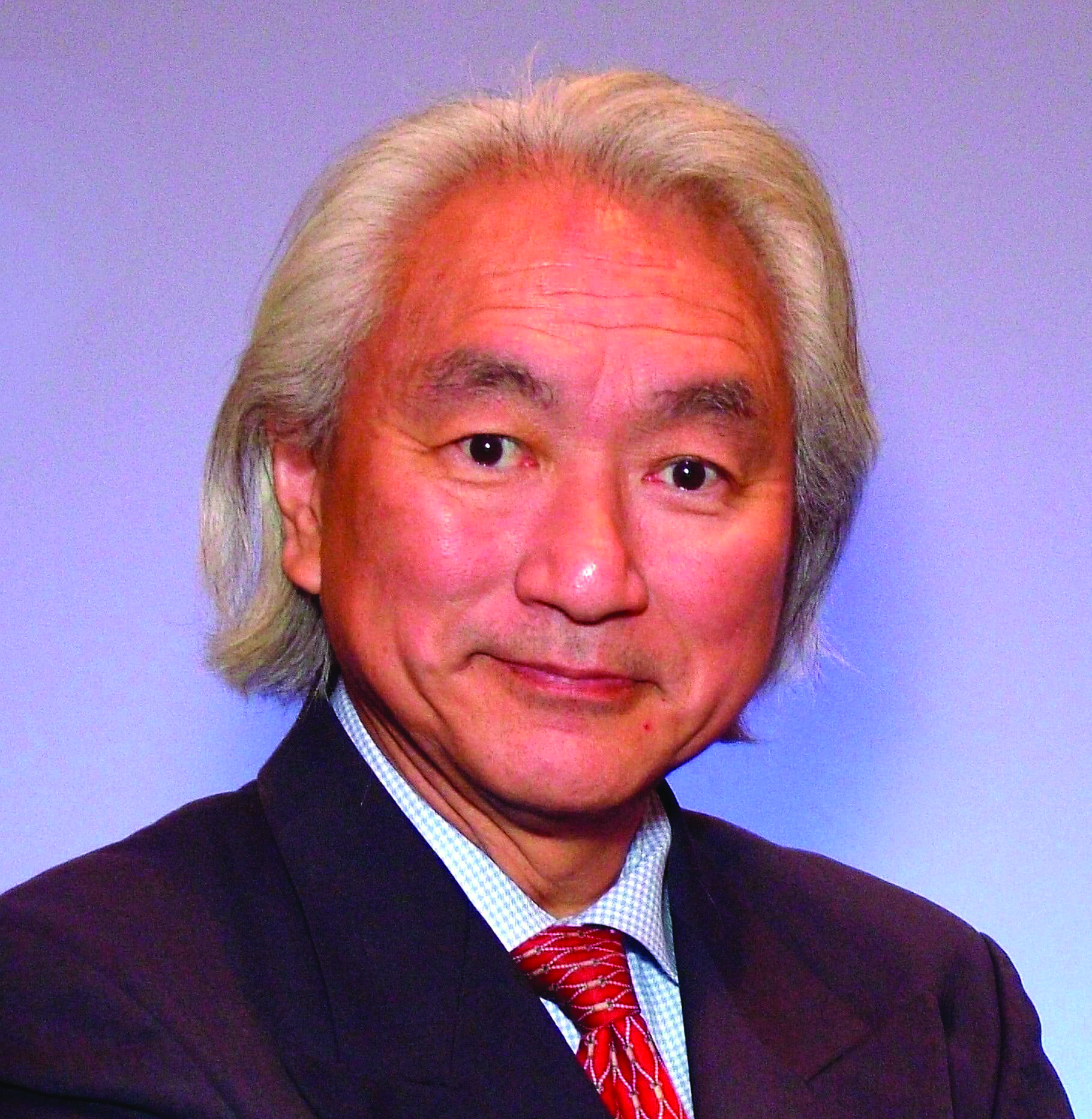
World-renowned physicist Michio Kaku, will provide a keynote on how the transition to a quantum economy will rely on the optical networks being built today (Credit: FBA)
“Having Michio Kaku for our 25th anniversary is amazing,” Koch adds. “It helps us look at the big picture. We spend so much time talking about digging trenches and permitting, but it’s important to remember that we are building the foundation for quantum communications and technologies that haven't even been invented yet.”
The "Quantum and Fiber" track will examine how existing fibre infrastructure can be used for quantum key distribution (QKD) and the challenges of maintaining signal integrity for quantum states over long distances. While still in the early stages, it is a topic of significant interest for government and enterprise-focused operators.
Policy, permitting, and the BEAD programme
For many attendees, the most critical sessions will be those involving the NTIA (National Telecommunications and Information Administration) and the progress of the $42.45 billion BEAD programme. As states move from the challenge process to awarding sub-grants, the administrative and regulatory hurdles are coming into sharp focus.
FBA’s policy committees will lead workshops on navigating the "Buy America" requirements, ensuring compliance with labor standards, and the ongoing battle over pole attachments, a perennial thorn in the side of fibre deployers. These sessions are often the most highly attended, as they provide practical, legal, and regulatory advice that can save operators millions in deployment costs.
Workforce development: The OpTIC Path™
A recurring theme throughout FBA’s mission is the OpTIC Path™ programme, aimed at solving the industry's significant labour shortage. Without enough trained technicians to blow fibre and perform splices, the ambitious 2030 connectivity targets will remain out of reach. The association’s goal is to standardise training across North America, ensuring that a "certified fibre technician" has a consistent set of skills regardless of where they were trained.
Fiber Connect 2026 will host the second annual OpTIC Path Rodeo, a fibre technician skills and knowledge competition.
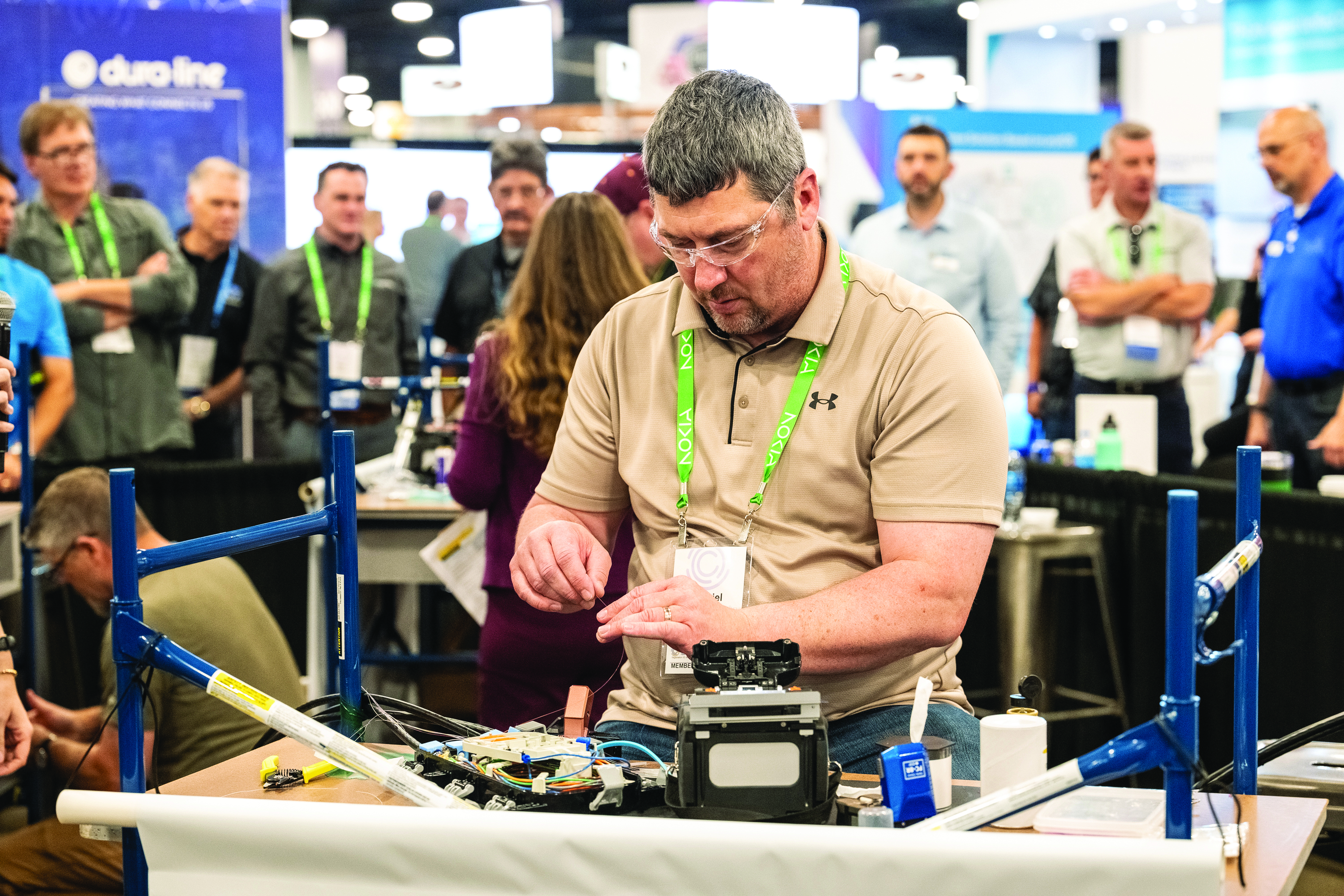
Competition was fierce at FBA’s first annual OpTIC Path Rodeo last year. (Credit: FBA)
Why Orlando?
The choice of Orlando as the host city is no accident. Beyond its accessibility as a major convention hub and world-class facilities, Florida represents a critical battleground in North American fibre deployment. The state has seen aggressive expansion from both established providers and ambitious altnets, whilst innovative municipal networks and rural broadband initiatives demonstrate the diverse approaches required to bridge the digital divide across varied terrain, from dense urban centres to remote coastal communities.
The Gaylord Palms Resort allows the entire event, sessions, exhibition, and networking, to take place under one roof, fostering the "serendipitous conversations" that Koch says are the hallmark of the event.
Closing the 2026 issue
As Fibre Systems reports on the global race to 2030, Fiber Connect 2026 stands as a critical barometer for the North American market. The shift from a 2001 technical council to a 2026 infrastructure powerhouse is complete. The challenge now is to ensure that the massive investments being made today result in sustainable, high-performance networks that can support the AI and quantum demands of tomorrow.
“We want people to leave Orlando feeling like they have a roadmap,” concludes Koch. “Whether you’re a small cooperative or a giant vendor, the goal is the same: ensuring that every community has access to the life-changing benefits of fibre. We’ve done a lot in 25 years, but in many ways, we’re just getting started.”